If you are starting or growing your career in networking or IT, the CCNA certification is often the first name you hear.
But what is the CCNA? Is it really worth the effort? And most importantly, is it the right certification for you?
This guide will not explain basic definitions you can find everywhere else.
In this guide, you will learn:
- How to know if the CCNA is worth several months of preparation in your specific situation
- What the CCNA will realistically bring to your career
- The real steps to prepare for the CCNA without wasting time
- What skills you need before starting
1) How to know if the CCNA is worth several months
This is the most important question.
The honest answer is: it depends on your career goals.
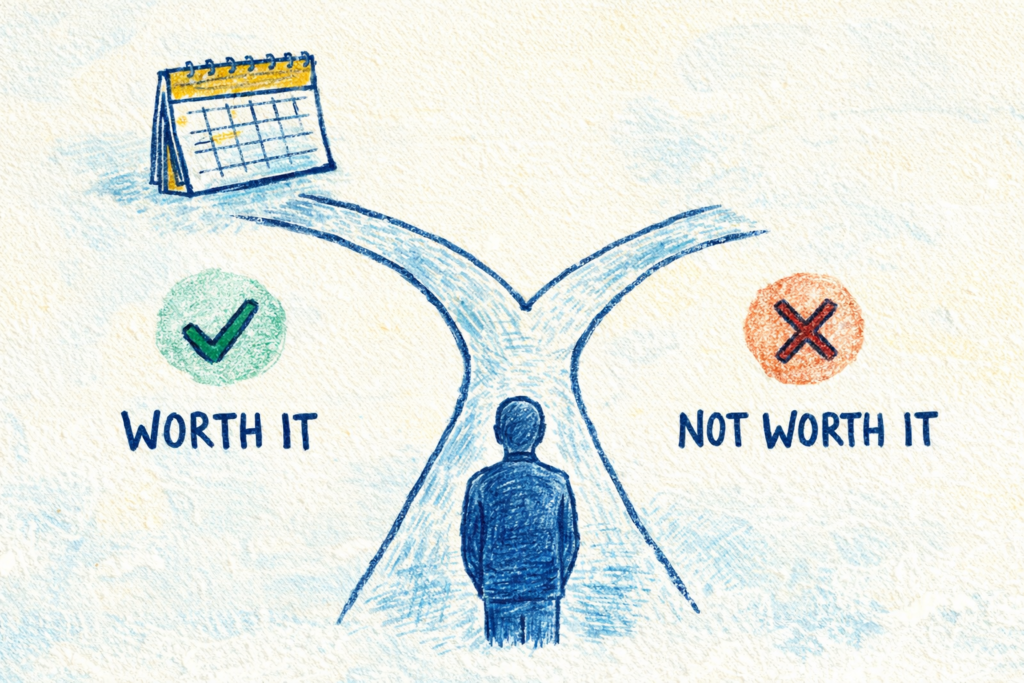
The CCNA Is Worth It If:
- You want to work in networking (NOC, network engineer, infrastructure roles)
- You are early in your IT career
- You feel lost with networking fundamentals
- You want a structured learning path
The CCNA Might NOT Be Worth It If:
- You are already a senior engineer with years of hands-on experience
- Your career is focused purely on software development
- You only want a certification “for the paper”
The CCNA is a learning certification, not a checkbox.
2) What the CCNA will realistically bring to your career
Let’s be honest: the CCNA will not magically get you a high-paying job overnight.
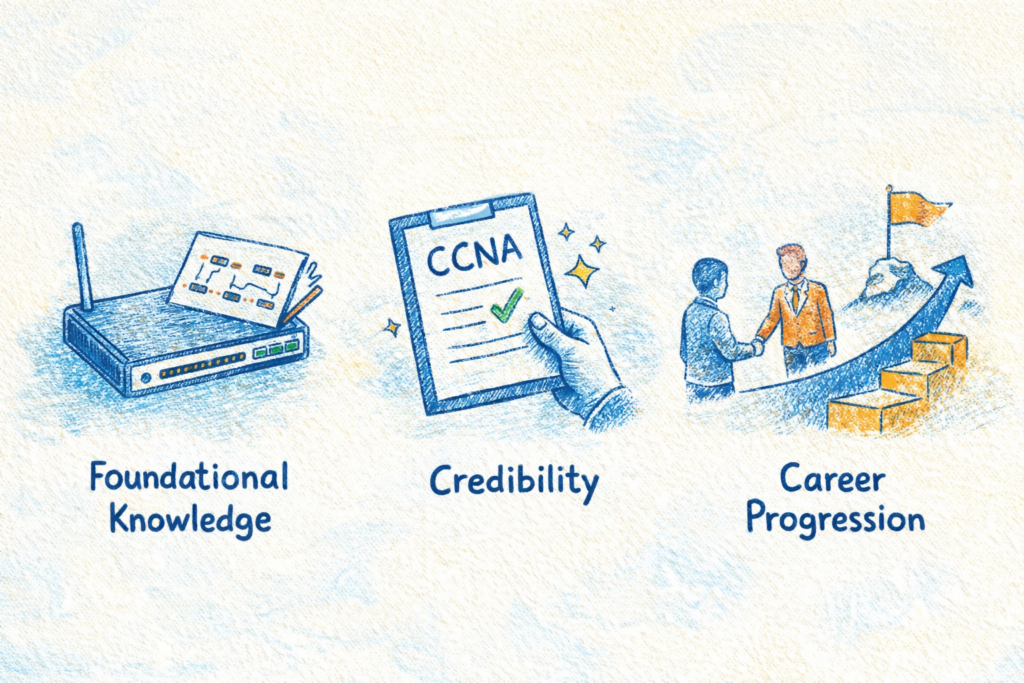
What it will give you is:
A Strong Networking Foundation
The CCNA forces you to understand how things actually work, not just how to click buttons.
You will finally understand:
- Why networks break
- How packets move
- What happens behind the scenes when something fails
This foundation makes everything else easier later.
Credibility as a Junior Network Professional
For recruiters and hiring managers, the CCNA signals that:
- You are serious about networking
- You can learn complex technical concepts
- You have discipline and structure
For junior roles, this matters.
Faster Career Progression
The CCNA often acts as:
- A door opener for your first networking job
- A credibility boost if you are switching from another IT role
- A foundation for more advanced certifications later (CCNP, security, cloud)
3) What Skills Should You Have Before Starting?
Many will say that having other certifications such as CompTIA A+ or CompTIA Network+ is required.
This is not true.
If you already work in IT, it’s absolutely not necessary. I passed my CCNA without any other certifications. And I had never touched a switch before.
However, if you are changing careers or have never worked in IT, then yes, start with CompTIA A+ bedore CCNA!
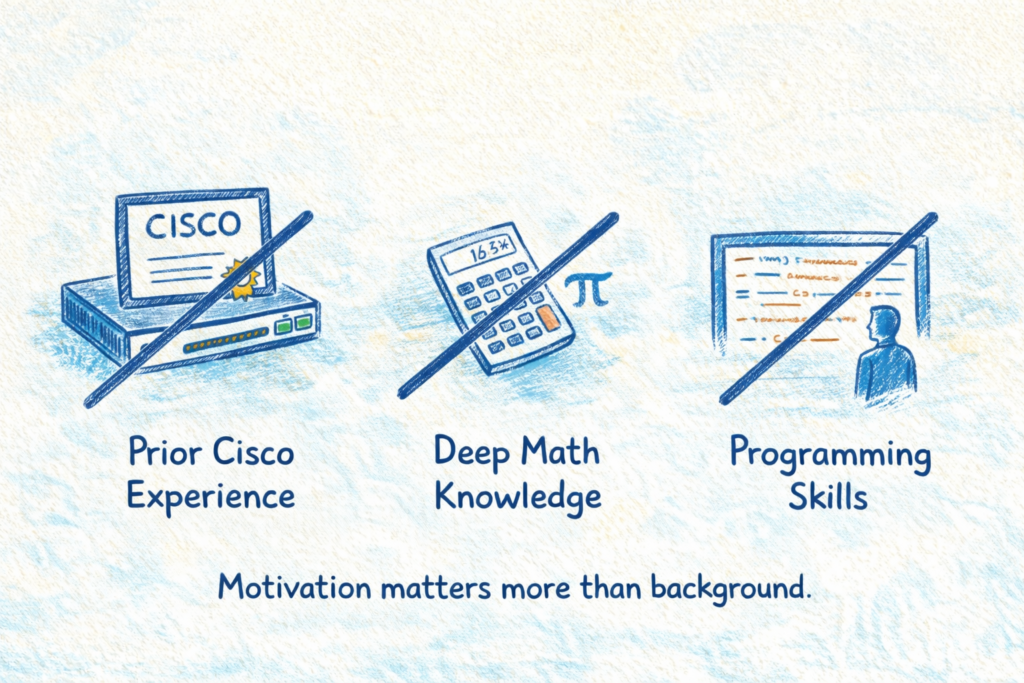
But in any case, you do not need:
- Prior Cisco experience
- Deep math knowledge
- Programming skills (automation is introductory)
Motivation matters more than background.
4) What skills you need before starting
Here, I recommend the CCNA Exam Guide that I wrote. It discusses the CCNA topics, the structure of the exam, and even shows you the different types of questions.
You can find it here: CCNA Exam Guide