
The CCNA is often presented as an entry-level certification.
In reality, it is where many people give up.
Not because networking is impossible to learn, but because most CCNA courses are boring, long, and poorly adapted to self-study. Videos pile up, motivation drops, and after a few weeks the course is abandoned.
I have looked at the most popular CCNA courses people actually use today. None of them are perfect. Some are solid. Some are motivating but shallow. Some are official but painfully slow.
Here is an honest comparison of five well-known CCNA courses, with their real strengths and real weaknesses.
They are ranked by preference.
1. PingMyNetwork
Link: PingMyNetwork Platform
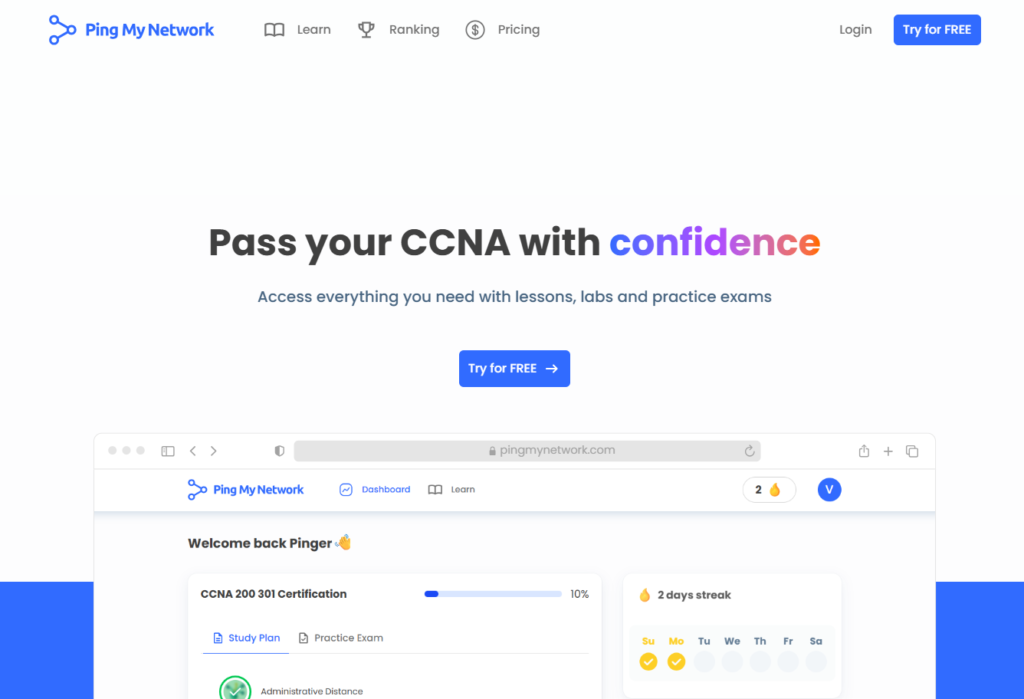
PingMyNetwork is still a young platform, and that needs to be stated clearly. It does not yet have the long history or brand recognition of Cisco NetAcad or well-known YouTube creators. For some learners, that can feel like a risk.
Another important point is that PingMyNetwork is a paid resource. Access is not free, and that alone will eliminate it for some people.
That said, the platform exists for a specific reason.
PingMyNetwork was built around a very specific observation: traditional CCNA courses assume that learners can stay focused for months while consuming passive content. In reality, most people cannot.
How PingMyNetwork is actually different
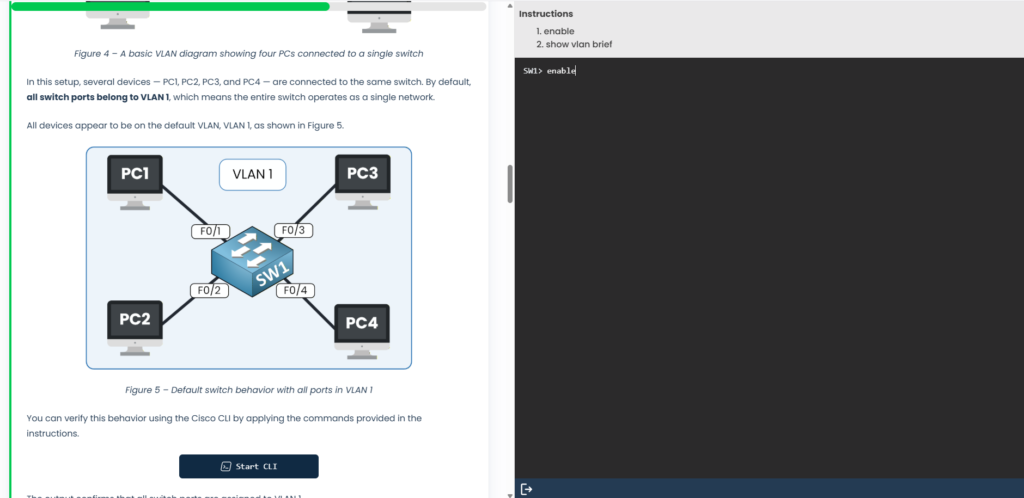
Most CCNA platforms rely heavily on long videos. The learner’s role is passive. You watch, you listen, and you hope that understanding follows.
PingMyNetwork forces the opposite behavior.
Lessons are short, written, and interactive. You are constantly asked to think, answer, validate, and move forward step by step. You cannot progress by simply “going through” the content. You have to engage with it.
This may sound simple, but it changes the learning dynamic completely. Instead of wondering “Did I really understand this?”, you get immediate feedback.
Focus on comprehension, not content volume
Another important difference is scope control.
Many CCNA courses try to be exhaustive. They include everything, sometimes more than what the exam requires. This creates long, heavy learning paths that feel endless.
PingMyNetwork deliberately avoids that. The content is aligned with the CCNA exam objectives, but it is optimized for retention and clarity, not for academic completeness.
For someone studying after work or alongside a job, this matters a lot.
Motivation over time
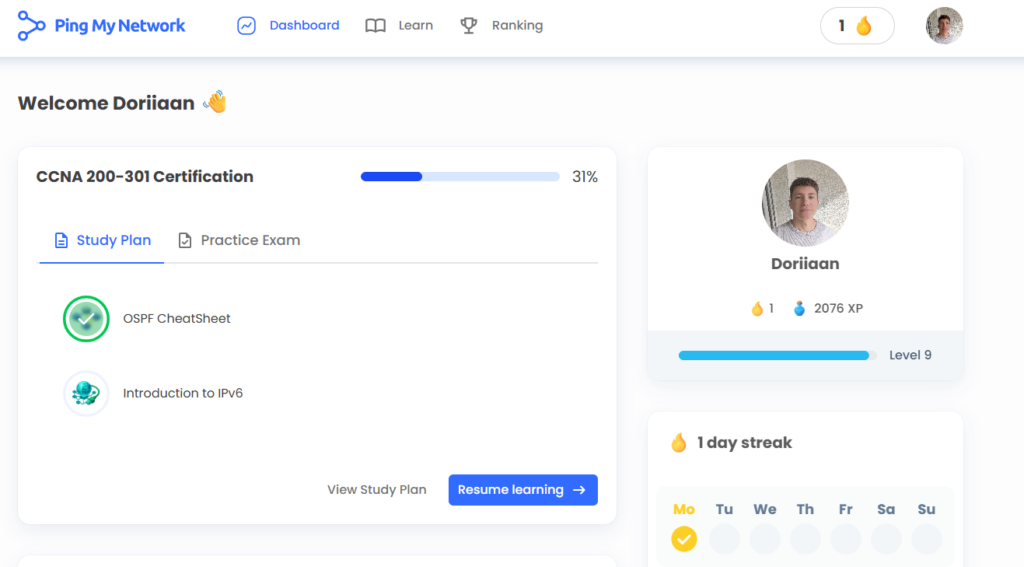
PingMyNetwork also acknowledges something many platforms ignore: motivation is not constant.
The platform uses light gamification and visible progress indicators, not as a gimmick, but as a way to maintain momentum over weeks. You always know:
- what you have done
- what is left
- why continuing makes sense
This is especially valuable for beginners and first-time CCNA candidates.
Real limitations
PingMyNetwork is not perfect.
- The platform is young and still evolving
- The community is smaller than established platforms (but very active)
- There is currently only one certification available, the CCNA
If you want a massive catalog or years of proven history, this is not it.
But if you already know that videos make you disengage, and that extremely long courses push you to quit, PingMyNetwork is arguably one of the most realistic options available today.
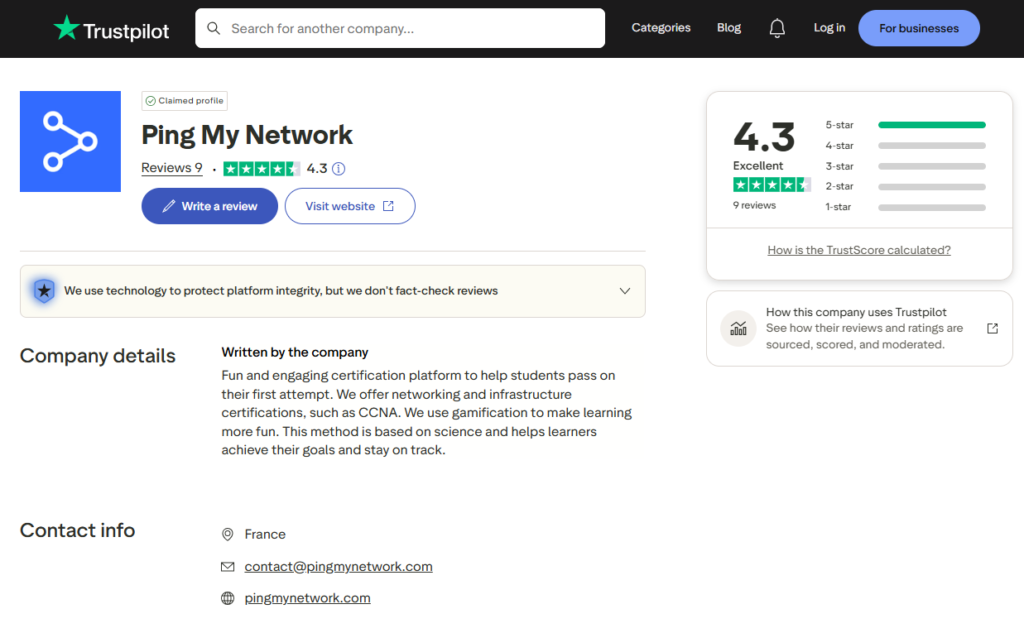
2. Jeremy’s IT Lab
Link: Jeremy IT Youtube Playlist
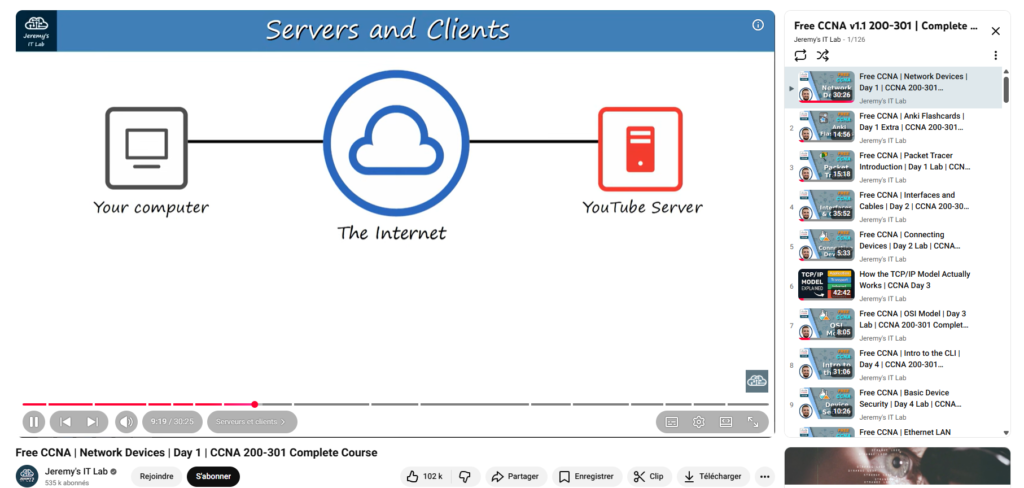
Jeremy’s IT Lab is one of the most well-known CCNA resources. It is highly recognized in the networking community and often recommended to beginners.
The main CCNA course is free and based almost entirely on video lessons. The explanations are clear and technically solid. Jeremy also provides flashcards, which are useful for memorizing concepts, ports, and protocols.
However, the course is not entirely free.
While the videos cost nothing, important practice resources are paid, especially the practice exams. Once added, the total price can become higher than PingMyNetwork.
Another limitation is the format. Learning is mostly passive. You watch long videos and manage your own progress. There is little built-in validation of understanding beyond self-testing.
Jeremy’s IT Lab is a strong and respected resource, especially for learners who want free video content. It is less suitable for learners who struggle with focus or who want a fully integrated, all-in-one course.
3.Cisco NetAcad
Link: Cisco Netacad
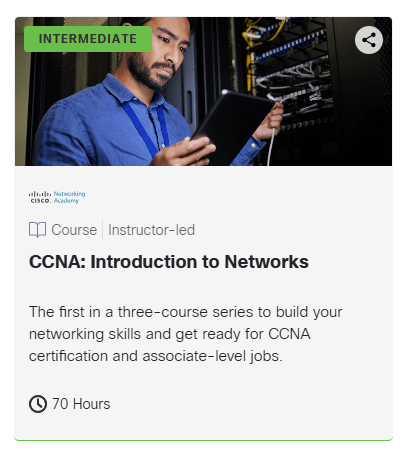
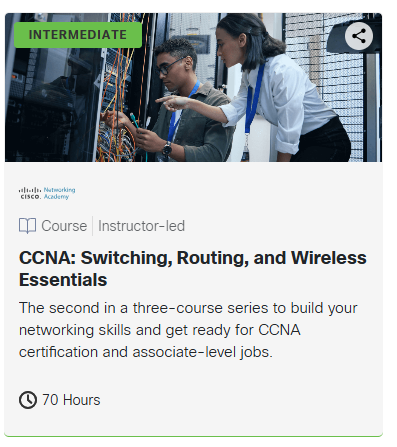
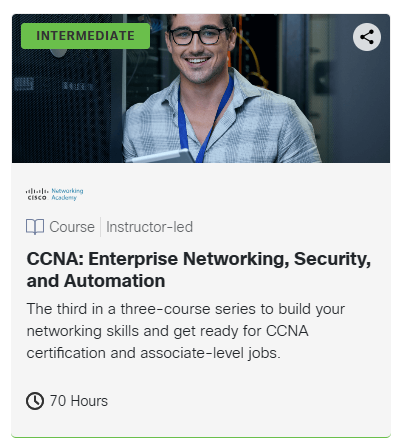
Cisco NetAcad is often seen as the “official” CCNA path, but it is important to understand how access works.
NetAcad is generally not available as a simple standalone course.
Access is usually provided through universities, schools, or corporate partnerships. For independent learners, this alone can be a significant barrier.
When accessible, the content is extremely detailed and very academic. The pacing is slow, and the amount of reading is substantial. Many learners take more than six months to complete the full CCNA curriculum.
NetAcad works best in a formal education or corporate training environment. For self-study, it often feels long and difficult to sustain.
4. Neil Anderson (Udemy)
Link: Neil Anderson Udemy
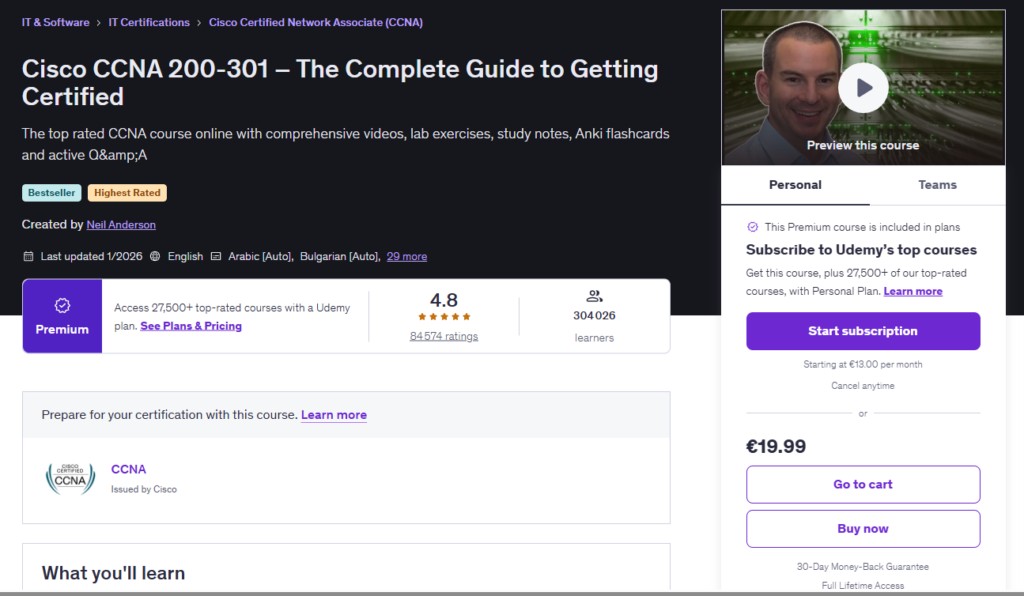
Neil Anderson’s CCNA course is a popular option on Udemy. It is often available at a low price, especially during Udemy promotions, which makes it accessible to many learners.
The course is well structured and covers the full CCNA syllabus. The explanations are clear, and the labs are useful for understanding basic networking concepts. From a content perspective, it does what it promises.
The main issue is the learning format. The course relies heavily on long video lessons. For many learners, this becomes repetitive and boring over time. Motivation drops, progress slows, and a large number of students simply stop before finishing the course.
Neil Anderson’s course can work well for learners who already know that video-based learning suits them. For those who struggle with attention or engagement, the format is often the reason they quit.
5. NetworkChuck Academy
Link: NetworkChuck Academy
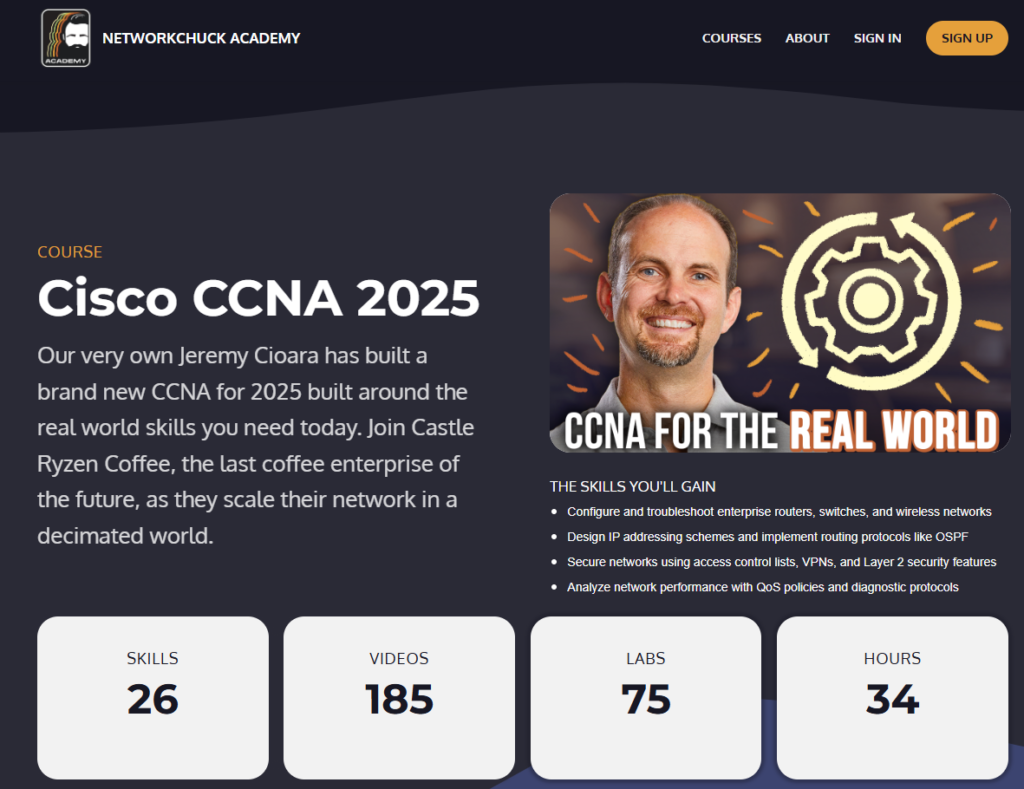
NetworkChuck is very effective at attracting people to networking and IT in general. His content is engaging and easy to follow, which helps many beginners take their first steps.
However, when it comes to CCNA preparation, the main limitation is simple: the content is not complete.
The academy does not cover the full CCNA exam scope in a structured and comprehensive way. Important topics are missing, and the learning path does not fully align with the exam objectives. Because of this, the course cannot realistically be used as a standalone resource to prepare for the CCNA.
NetworkChuck Academy can be useful as an introduction or a supplementary resource, but learners will need another, more complete course to actually prepare for and pass the CCNA exam.
Final thoughts
There is no single CCNA course that fits everyone.
Some learners want free resources and are willing to trade efficiency for cost. Others want official content and accept a long timeline. Others struggle mainly with focus and motivation.
PingMyNetwork is a paid and young platform. Those are real constraints.
At the same time, it is one of the few courses that openly addresses the reality of self-study and tries to adapt the format to how people actually learn.
For learners who already know that passive learning does not work for them, it is a realistic option worth considering.